English
 O'zbek
 slovenčina
 Gaeilgenah Éireann
 hrvatski
 magyar
 Français
 Čeština
 bosanski
 日本語
日本語 українська
 suomi
suomi
How to choose different boards for kitchen cabinets?
Oct 24, 2022
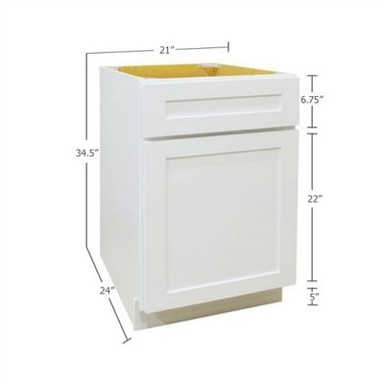
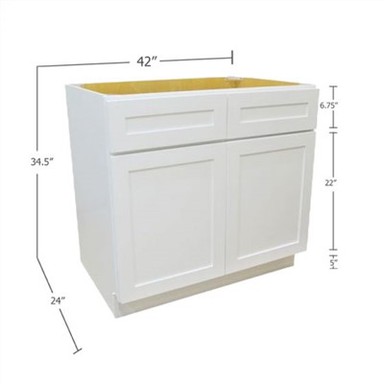
Kitchen cabinets are usually divided into base cabinets and wall cabinets according to their locations. Although the positions are different, their components are basically the same. After disassembling the cabinets, the cabinets are composed of cabinet body, countertops, hardware accessories and functional accessories. It can be found that the cabinet body alone accounts for more than half of the cost. The cabinet body can be subdivided into cabinet panels, door panels & sealing panels, back panels, sink bottom panels, etc.
1. Cabinet construction panels
The cabinet board is the skeleton of the entire cabinet, which directly affects the quality, life and environmental protection of the cabinet, so you need to be extra cautious when choosing
There are several specifications of plates that can be used as cabinet boards, with thicknesses ranging from 36mm, 25mm, 18mm, 15mm, etc. Usually, 36mm and 25mm are less used (generally used for bookshelf partitions, desk tops), and 18mm is commonly used in cabinets. ~15mm thick sheet.
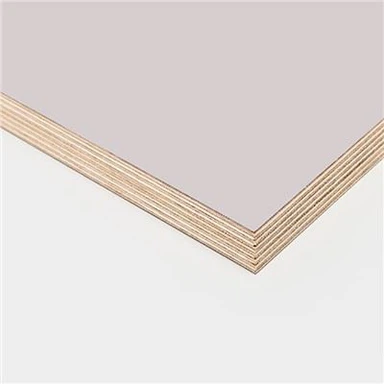
Generally, the 18mm thick plate of the same material will cost about 7% more than the 16mm thick. plate. The material of the board is also different, the common ones are particle board, ecological board, multi-layer board, osong board, finger joint board and so on.
① Particleboard
Particle board is a kind of cutting of various branch buds, small-diameter wood, fast-growing wood, sawdust, etc. into pieces of a certain size. It is a kind of wood-based panel with uneven particle arrangement.
Particleboard has good sound absorption and sound insulation properties; the interior is granular with a cross-staggered structure, the performance of each part is basically the same, and the lateral bearing capacity is relatively poor; the surface of the particleboard is flat and can be veneered; The amount is small, and the environmental protection coefficient is relatively high.
However, the particle board has a granular structure inside, which is not easy to be milled; it is easy to cause the phenomenon of tooth bursting when cutting the board, so some processes have higher requirements on processing equipment; and other materials, so there is a certain pollution.